
The One-Sentence Rule
Commercial overhead doors are built heavier and cycle far more often than residential garage doors, so they need maintenance on a fixed schedule instead of waiting for something to go wrong — but there are real exceptions on both sides worth knowing before you settle this argument.
If you're trying to figure out whether your detached garage, home workshop, or small storefront door counts as "commercial," the answer usually comes down to cycle count and construction, not just size.
Exception One: Cycle Count Matters More Than Size
A single-family home's garage door might open and close four to six times a day. A warehouse bay or loading dock door can cycle 20, 50, even 100+ times in a shift. That difference in use is the real dividing line — not whether the door looks big.
- A two-car residential door used lightly, even if it's wide, is still residential in how it should be maintained.
- A single-bay door on a small home-based business that only opens twice a day doesn't need a full commercial maintenance schedule, even though it's technically "commercial use."
Exception Two: Older Residential Doors Can Behave Like Commercial Doors
Burlington County has a lot of older housing stock, and original garage doors from decades back often ran on heavier-gauge steel, older-style torsion springs, and simpler openers than what's sold today. If your door and hardware are original to an older house, it may need the kind of closer attention a commercial door gets — not because it's used more, but because the components are older and the tolerances looser.
How Construction Actually Differs
Once you get past use patterns, the physical differences are real:
- Steel gauge: Commercial doors typically use thicker, heavier-gauge steel panels to withstand frequent impact from forklifts, pallets, and foot traffic.
- Springs: Commercial torsion springs are rated for tens of thousands of cycles, not the 10,000-cycle standard common on residential springs, because the door simply moves more.
- Operators: Residential openers are almost always belt or chain drive on a rail, sized for a door under 10 feet wide. Commercial operators are often chain hoist or jackshaft units built for heavier doors and continuous-duty use.
- Wind load and fire rating: Commercial buildings often require doors engineered to a specific wind-load rating, and some need fire-rated assemblies between units — requirements that essentially never apply to a house.
- Insulation and sections: Warehouse doors are frequently built with thicker insulated sections to control temperature across a larger opening, especially if the space is heated or cooled.
Maintenance: Where the Real Difference Shows Up
This is the part that actually affects your wallet and your argument.
Residential Maintenance
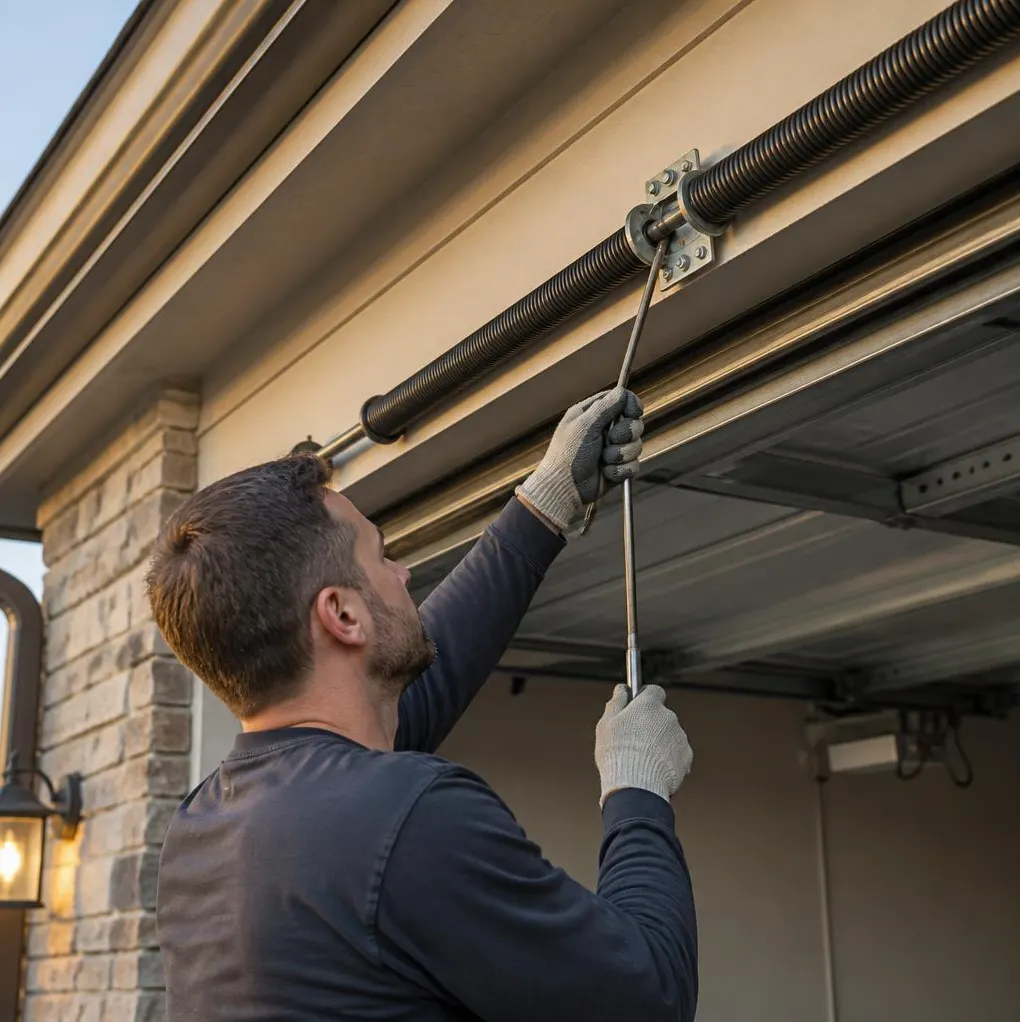
A homeowner can usually get away with checking the door once or twice a year — lubricating rollers and hinges, listening for new noises, and testing the auto-reverse safety feature. Add an extra look-over before winter, since the freeze-thaw cycles and road salt that come with our nor'easters and icy stretches can stiffen hardware and corrode exposed metal parts faster than people expect.
Commercial Maintenance
A commercial door earning its keep every day needs a documented schedule, not a once-a-year glance:
- Monthly visual checks of cables, rollers, and track alignment, since high cycle counts wear these parts faster.
- Scheduled lubrication more often than residential — every month or two depending on use, rather than twice a year.
- Spring replacement on a cycle-based schedule, not just when one breaks, because a failed spring on a heavy commercial door is a bigger safety and downtime problem.
- Seasonal weatherstripping and bottom seal checks — this matters a lot locally, since humid summers swell wood trim and seals, and winter salt spray tracked in by vehicles accelerates corrosion on tracks and hardware.
- Operator inspection, since commercial openers run harder and the gears, chains, and limit switches wear accordingly.
The cost of skipping this isn't just inconvenience — on a commercial door, a stuck or failed opener can shut down a loading dock or storefront for a day, which is a different kind of expensive than a homeowner waiting on a repair appointment.
What This Means for the Argument
If one of you is treating a lightly used home garage door like it needs monthly professional inspections, that's overkill. If the other is treating a daily-use commercial bay door like it can wait until something breaks, that's a real risk — both to safety and to how long the door and opener last. The honest middle ground: match the maintenance schedule to how often the door actually cycles and how old the hardware is, not to whether the building is a house or a business.
When to Call Mt Holly Garage Door
If you're not sure which category your door falls into, or you've got a commercial bay door that hasn't had a real inspection in a while, that's worth a call before winter sets in. Mt Holly Garage Door handles both sides of this — Commercial Garage Doors service for businesses needing a cycle-rated maintenance plan, spring upgrades, or heavier operators, and Preventive Maintenance visits for homeowners who want their door checked and lubricated before the freeze-thaw season does its usual damage to tracks and hardware.
We serve Mt Holly, Lumberton, Hainesport, Eastampton, Westampton, Moorestown, Burlington, and Medford, and we're happy to tell you straight whether your door needs a quick seasonal tune-up or a heavier-duty maintenance plan. Call Mt Holly Garage Door today to get your garage door — residential or commercial — ready for the winter ahead.